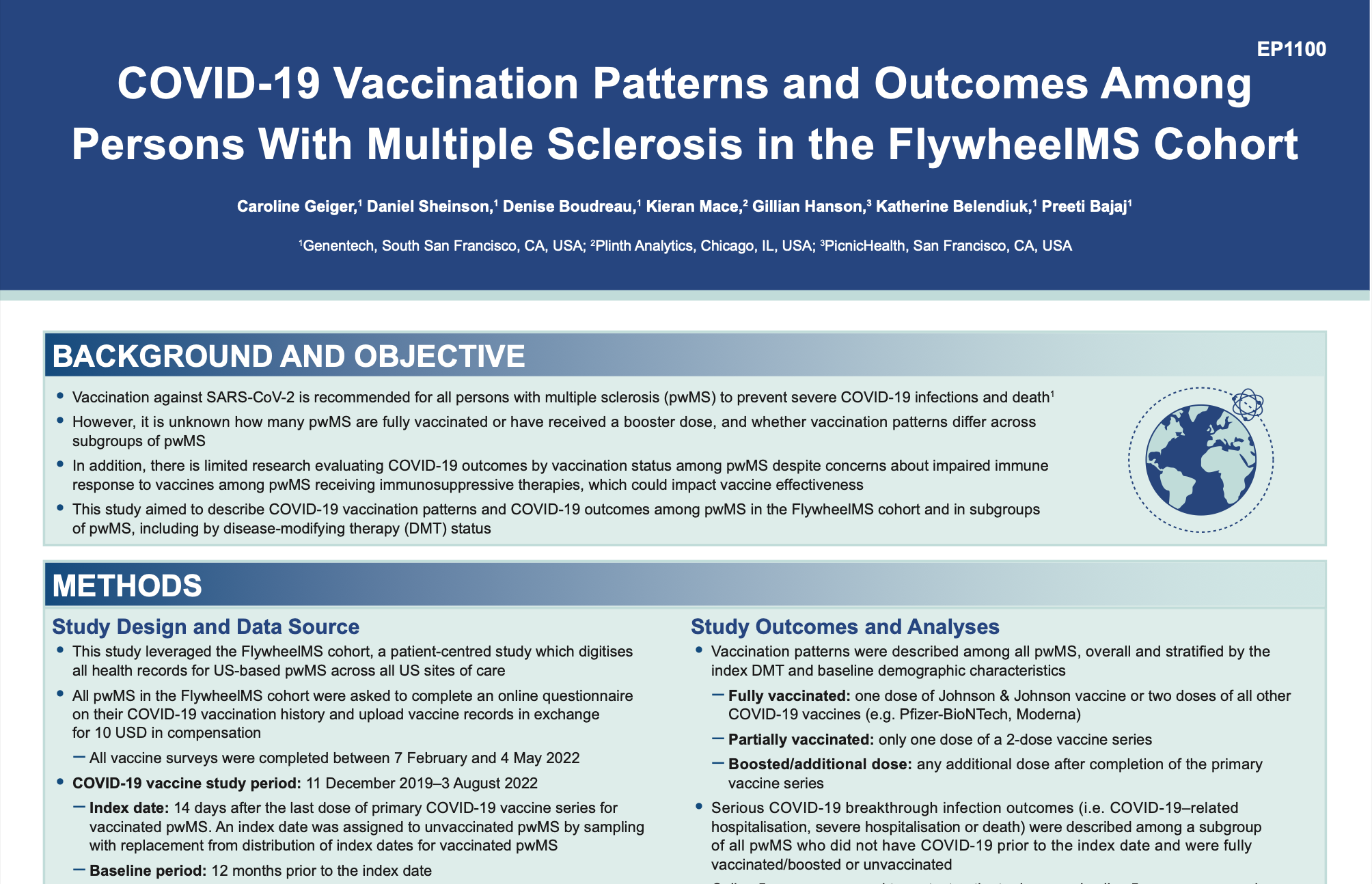
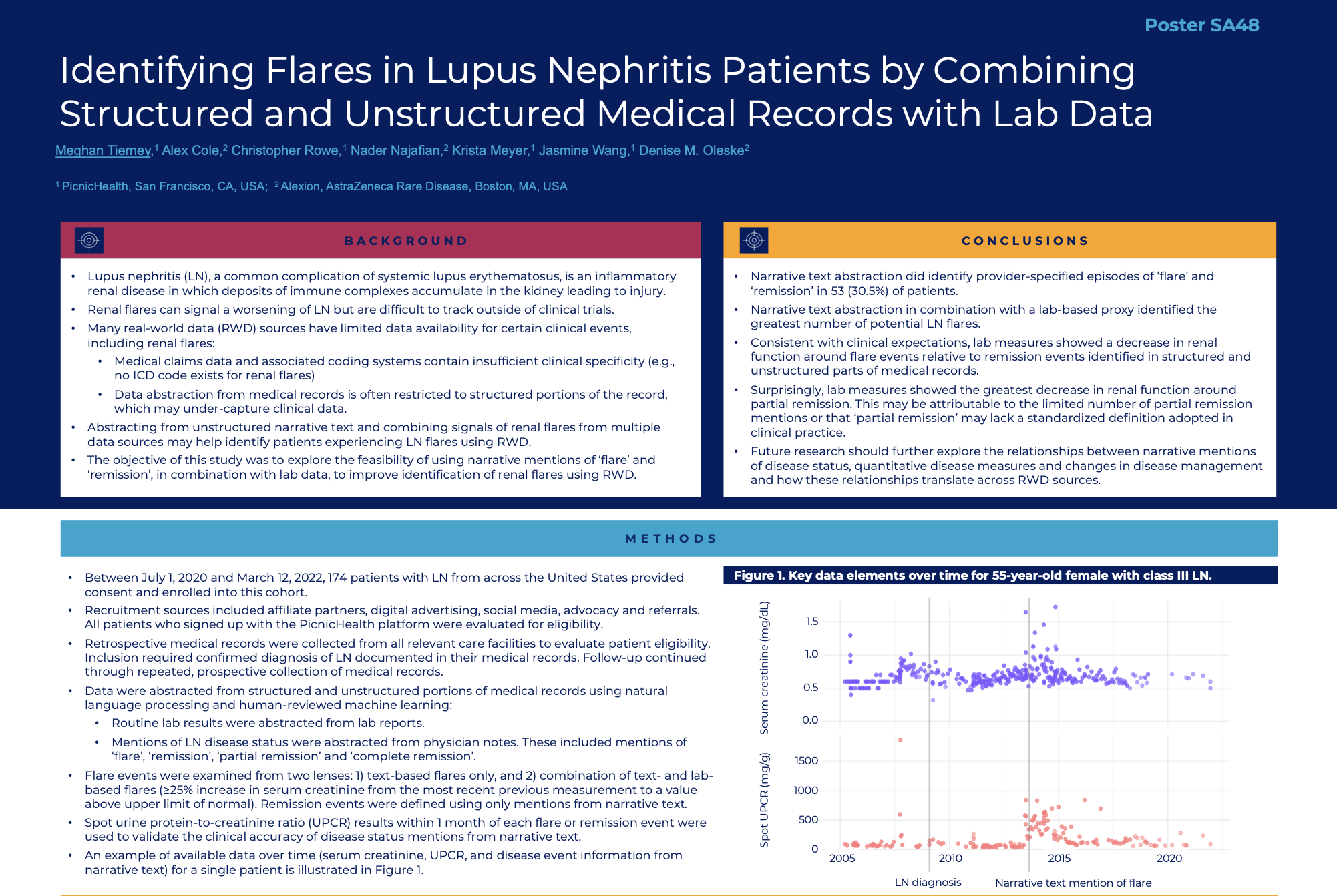
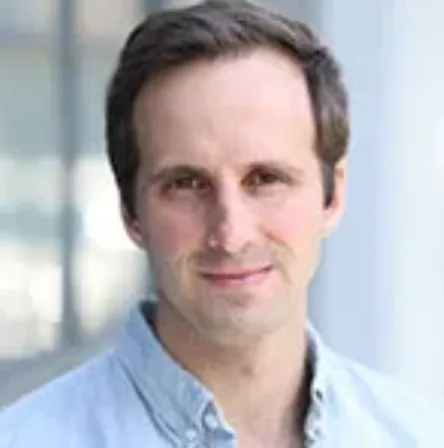
In honor of Rare Disease Day, we dove into an insightful Q&A session with PicnicHealth's Chief Medical Officer, Daniel R. Drozd, an MD at the forefront of pioneering healthcare research.
The World Health Organization considers a disease rare if fewer than 65 out of every 100,000 people are affected. While rare diseases individually impact a small number of people, collectively, the 10,000+ known rare diseases affect more than 30 million people in the U.S.
Rare Disease Day raises awareness for people with rare diseases, along with their families and caregivers. It has helped establish rare diseases as a key healthcare priority and aims to ensure that rare disease patients have equitable access to diagnosis, treatment, and comprehensive healthcare. Currently, only about 5% of rare diseases have FDA-approved treatments.
In line with this, we want to shed light on the transformative impact of PicnicStudies, a platform designed to address the challenges researchers and patients face in the realm of rare diseases.
Join us in exploring the potential of PicnicStudies' direct-to-patient approach in driving more efficient observational research and registries, and empowering rare disease researchers, providers, and patients.
Q: What are the common challenges associated with traditional observational research models, particularly in collecting comprehensive data on the patient journey?
A: Traditional observational research models often run into a few significant roadblocks. Because of how they are designed, they tend to reach only a limited number of patients, experience high loss to follow-up and low site and patient engagement, and rely on too few data sources. All of this makes it tough to get a complete and representative picture of patient experiences.
Also, when research is tied to specific locations, it can unintentionally leave out groups of people and create biases in the research. This issue is particularly pronounced in rare diseases, where the number of patients is already small and they often live far from traditional sites making participation a significant challenge.
Q: How do direct-to-patient approaches mitigate the challenges observed in traditional models?
A: Direct-to-patient approaches are not limited by site boundaries. Participants can be enrolled virtually, which brings in a broader, more varied and representative population. It places significantly less burden on patients who can participate without leaving their home. Additionally, more data can be captured – we can capture data from wherever a patient has been seen ensuring that important events are captured no matter where or when they occur, both retrospectively and prospectively.
Finally, a direct-to-patient approach means no physical sites need to be used for data collection at all, decreasing burden on patients and making it more likely that they will stay engaged long-term.
Q: What are the unique features of PicnicStudies that support the collection and analysis of comprehensive data?
A: Helping researchers achieve data completeness was one of our highest priorities when building PicnicStudies.
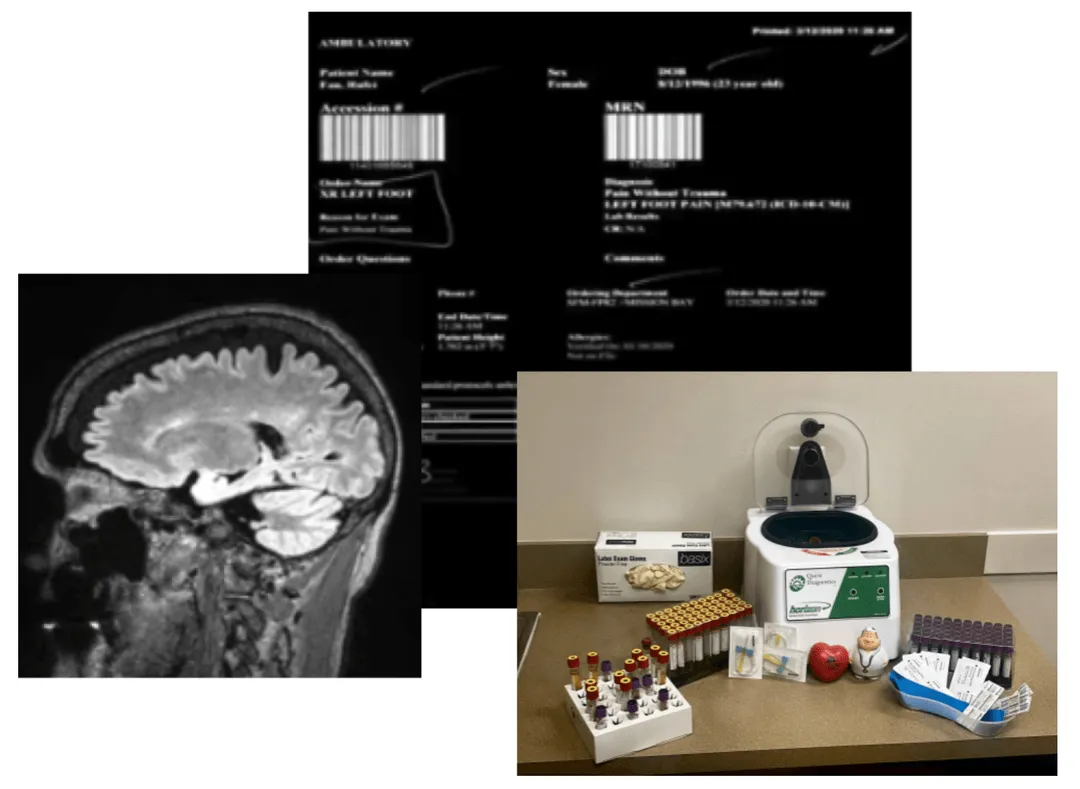
For one, PicnicStudies collects longitudinal data across all patient records, including primary and specialty care, labs, vitals, and hospitalizations, to name a few. Based on our partners’ needs, we can also administer surveys on patient reported outcomes and clinician reported outcomes to better understand the patient experience.
PicnicStudies also uses a variety of decentralized channels to recruit patients that match the specific study criteria. This increases the geographic and demographic diversity in studies, leading to results that may be more generalizable to real-world patients.
PicnicStudies engages patients in ways that support long-term but minimal participation. We reduce the need for patients to visit sites in person and, to deliver value, we provide them with access to all their medical records in one location. This is important because it reduces the project management burden of being a rare disease patient trying to navigate our complex healthcare system - an experience we know is challenging and often isolating. It also helps patients get better and more efficient care, after all we can’t expect physicians to deliver optimal care with access to only partial patient information.
Q: How does PicnicStudies’ approach provide value back to providers and patients?
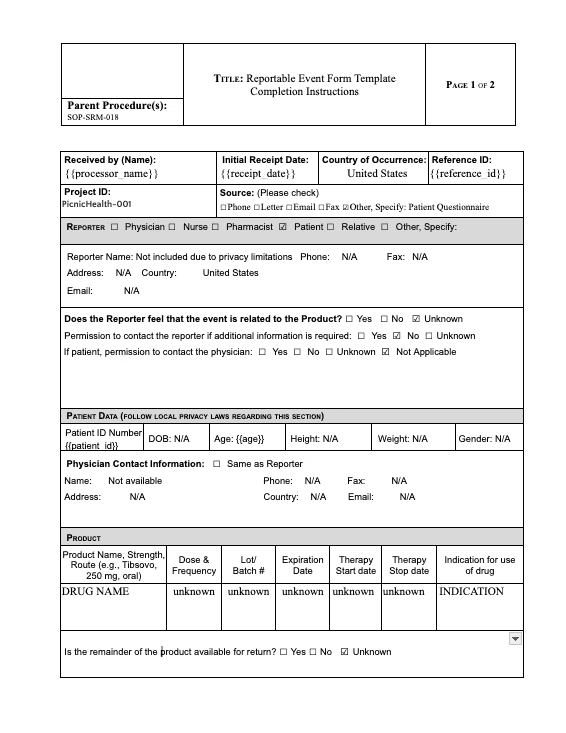
A: For providers, burden is significantly lessened because we capture patients’ data directly from medical records. This eliminates the need for manual data entry. Since we can also use AI technology to recommend patients who fit eligibility criteria, we also reduce the burden of manual patient eligibility verification. In fact, if a patient uses PicnicStudies’ virtual site instead of a traditional, physical site, the provider's workload drops to zero.
Patients, on the other hand, get a comprehensive view of their records which can enhance care coordination for complex conditions. We've had patients express hope after participating in a study run by PicnicHealth – not just because they could more easily access their health data through PicnicHealth's patient portal, but also from the possibility that researchers can now gain the insights needed to improve the outcomes for individuals like them living with rare diseases.
Q: How do direct-to-patient approaches and advanced technologies, as demonstrated by PicnicStudies, contribute to the future of observational research and patient registries, especially for rare diseases?
A: With researchers now being able to overcome some of the challenges they face with traditional models and, consequently, gather much deeper and broader data, the outcomes of future observational research and patient registries can be more accurate, generalizable, and reliable.
Direct-to-patient approaches also give life sciences companies a holistic view of how their drugs perform, their economic value, and deeper insights into specific patient groups. When combined with advanced technology, this bigger-picture view is a game-changer. Life sciences companies gain a competitive edge that can help with expanding drug labels, exploring new uses for drug therapies, and developing companion diagnostics.
Our conversation with PicnicHealth's Chief Medical Officer unveils a story of innovation in rare disease research. Rare Disease Day refocuses our attention on the challenges that patients and researchers face, and PicnicStudies emerges as a beacon of hope— offering new possibilities through a direct-to-patient approach that overcomes the limitations faced in traditional observational research.
Visit picnichealth.com/picnicstudies to discover more about how PicnicHealth is contributing to the fight against rare diseases.
For more Rare Disease Day inspiration, check out this community story about the role that Rare Patient Voice is playing in research.
About Daniel R. Drozd
Daniel R. Drozd, MD MSc, is the Chief Medical Officer at PicnicHealth, where he oversees scientific collaborations with PicnicHealth's industry and academic partners and works extensively with the product and commercial teams. He is an expert in clinical informatics and digital health and has, in the past, led research at the University of Washington on EHR-powered real-world research.